Broneeri tuba
+372 3599529 info@narvajoesuu.ee Aia 3, Narva-Jõesuu
Generic selectors
Exact matches only
Search in title
Search in content
Post Type Selectors

7 Tips on How Not to Overeat During the Holidays and Maintain a Good Sense of Well-Being

Author: Irina Tamme / Nutritionist / Lecturer in Nutrition and Health

Christmas is a time when food plays a major role, and the holidays are associated with many traditional dishes such as blood sausages, sauerkraut, roast pork, aspic, and gingerbread. You definitely don’t need to fear these or eliminate them from your menu, because they are part of the Christmas tradition — food is a part of culture. However, it is worth considering how to balance these often rich holiday meals with lighter options that support digestion and help you end the day feeling pleasantly light. Often, no major changes are needed — just a slightly more mindful approach. And that’s exactly what this post is about.


1. Focus on how you feel

Many people mentally prepare for a “holiday feast” long before Christmas, which creates tension and stress. Instead of thinking about what to put on the table and what to eat, try focusing on your well-being and aim to feel good throughout the holidays. Remember that food won’t disappear after the holidays — instead of eating until you’re stuffed, you can always save some for the next days. Rather than battling overeating and heaviness, listen to your body and stop when it signals that you’ve had enough.

2. Don’t skip meals during the day

A common mistake is “saving your appetite” for the evening feast. But this can do more harm than good. A long break between meals increases the risk of blood sugar fluctuations, and by the time you sit at the table, you’re so hungry that you fill your plate too quickly, paying little attention to flavors — often ending up overeating.
To avoid this, eat regularly throughout the day: a nourishing breakfast, a balanced lunch, and, if needed, a light snack. When you’ve eaten consistently, you won’t feel excessive hunger by evening, you’ll make more balanced choices, and you won’t feel the urge to “eat everything at once.”

3. Drink enough water — don’t confuse thirst with hunger

Thirst is often mistaken for hunger. Drink water mindfully during the day so you don’t become dehydrated by evening. Make sure water is available at the holiday table too. If you plan to drink alcohol or sugary beverages, remember to alternate them with water. To make plain water more appealing, add citrus slices, cranberries, mint, or cucumber.

4. Get enough sleep

During the holidays, days are often long and people go to bed late — resulting in shorter sleep. Unfortunately, lack of sleep affects the hormones (ghrelin and leptin) that regulate appetite. Poor sleep increases cravings for sweet and fatty foods and disrupts the satiety hormone, which should signal when you’re full. Even during the holidays, try not to compromise on sleep — 7–8 hours of rest will help you make better food choices and avoid overeating.

5. Stay active

The holidays are for slowing down, but that doesn’t mean abandoning physical activity entirely. You don’t have to go to the gym — there are many other ways to stay active. Even a gentle walk before or after dinner supports digestion and blood sugar regulation. If it’s snowy, have a snowball fight or go sledding with your family. If the weather is bad, do some stretching exercises at home. Movement increases daily energy expenditure, reduces cravings, and improves your overall well-being.

6. Make lighter choices

Traditional dishes are part of the holidays, but you can always adjust your menu with lighter options.

  • Add a variety of vegetable dishes to your holiday meals — cabbage, roasted vegetables, salads, appetizers. Vegetables are rich in fiber and add volume, helping you feel full. Start your meals with them.
  • Find an alternative to fatty pork — fish, turkey, chicken, or plant-based protein sources are filling but won’t cause heaviness. If you still love pork, choose a leaner cut, such as tenderloin.
  • Enjoy your traditional favorites in smaller portions — there’s no need to give them up, simply savor them slowly and mindfully.
  • Don’t go overboard with sweets — the table doesn’t need a mountain of desserts. Choose one or two favorites and enjoy them in moderation at the end of the meal.

It’s also important to listen to your body: if you feel full, you don’t need to finish what’s on your plate. You can always get more later — and there’s always tomorrow.

Plan fun activities

Overeating often happens because everything revolves around the table and there’s nothing else to do but eat. But it doesn’t have to be this way. Plan fun activities with your loved ones — play board games or other group games, organize a quiz, build a snowman, or create something together. These moments create cherished holiday memories and don’t depend on how many dishes were on the table or how much anyone ate. Food is important — but it is not the only part of the holidays!

 

Breakfast: Should You Eat It and What Should You Choose?


Author: Irina Tamme / Nutritionist / Lecturer in Nutrition and Health

Breakfast is a meal whose importance is widely discussed, yet it is just as often skipped — due to morning rush, lack of appetite, or simply habit. Nevertheless, the morning meal plays a significant role in our energy levels, mood, and overall health. In this post, I explain why breakfast is worth eating, how to turn it into a habit, and which choices help you start the day feeling energized and balanced.

Why Is Breakfast Important?

During the night, we do not eat, and the body remains in a fasting state for several hours. In the morning, the body needs fuel to stabilize blood sugar levels, activate metabolism, support brain function, and prepare for daily activity. Skipping breakfast often increases fatigue and concentration problems, leads to irritability, and may result in overeating later in the day. Many people experience extreme hunger at lunchtime or strong cravings for sweets — often because they skipped breakfast and blood sugar levels dropped too low.

Breakfast signals to the body that the day has begun. Digestion, hormonal regulation, and energy utilization are activated. Eating breakfast regularly may help maintain or even reduce body weight (if that is the goal), as blood sugar fluctuations decrease and later overeating becomes less likely. It is worth remembering that the body needs energy regardless — and it is far more beneficial to consume it during the day, when we are active, rather than late in the evening, when the body should be resting.

What If You Have No Appetite in the Morning?

Morning loss of appetite is very common and is often linked to eating habits the night before. Eating too late or having a heavy dinner directly affects morning hunger. At night, the digestive system naturally slows down, but late or heavy meals force the stomach and intestines to continue working long after falling asleep. As a result, the stomach may not be fully emptied by morning, leaving a feeling of fullness and reduced appetite.

Hormonal balance is also affected: the hunger hormone ghrelin does not rise because the body senses sufficient energy reserves, while the satiety hormone leptin remains elevated. Blood sugar and insulin levels may still fluctuate. Late meals can also disrupt sleep, which further affects appetite-regulating hormones, causing morning discomfort, lack of hunger, and stronger cravings for sugary and fatty foods later in the day. In short, the body does not get a proper “recovery break” overnight, and the natural morning hunger signal fails to activate.

How to Restore Morning Appetite:

  • Move dinner to an earlier time — allow 3–4 hours between dinner and bedtime
  • Reduce dinner portions — aim for a lighter evening meal than breakfast or lunch
  • Choose lighter evening meals — such as soup, salad, or a protein source (meat, fish, cottage cheese) with vegetables

How to Get Used to Eating Breakfast?

Ideally, breakfast should be eaten within 1–2 hours after waking. This helps prevent blood sugar from dropping too low and keeps energy levels stable. If you wake up very early or feel no appetite at all, even a small bite is a good start — the key is to provide the body with some energy and activate digestion. A more substantial breakfast can be eaten later.

If breakfast has not been a natural habit for you, start small. Building a habit does not mean eating a full portion right away.

You can begin with:

  • a few spoonfuls of Greek yogurt or plain cottage cheese with berries
  • a small portion of porridge with peanut butter and seeds
  • a small handful of nuts and a piece of fruit
  • a boiled egg and half a slice of bread or some fruit
  • half a sandwich made with whole-grain bread, ham, and cheese

Over time, your body will adapt, and morning appetite will increase naturally. You can then gradually increase portions and create more complete breakfasts, including vegetables.

Does Porridge “Go Straight to Belly Fat”?

Some time ago, a claim circulated in Estonia suggesting that porridge “goes straight to belly fat.” In reality, the problem is not porridge itself. Most likely, the claim referred to unbalanced porridge with jam. A carbohydrate-heavy porridge (for example, cooked in water and served with sugary jam) without sufficient fiber, protein, and fat can indeed cause a rapid rise and fall in blood sugar levels, leading to hunger and overeating later.

If you enjoy porridge, it is important to balance it properly and choose fiber-rich grains. A balanced porridge should include:

  • slow-digesting carbohydrates — whole-grain oats, buckwheat, quinoa
  • protein — cottage cheese, Greek yogurt, eggs, or natural protein powder
  • fats — nuts, seeds, peanut butter, butter, or olive oil
  • fiber — berries, seeds, whole grains

Such a porridge does not cause sharp blood sugar fluctuations and keeps you full for longer. A balanced porridge does not contribute to fat gain.

What to Eat for Breakfast?

As seen above, a good breakfast is balanced — it includes carbohydrates, protein, fats, and fiber. You can be creative and assemble breakfasts according to your preferences using:

  • protein sources — eggs, Greek yogurt, cottage cheese, ham, curd cheese, baked meat, hummus, fish, tofu, tempeh, low-fat cheese
  • fiber and slow-digesting carbohydrates — whole-grain bread and pastries, whole-grain cereals, granola without added sugar, fruits, berries
  • fat sources — avocado, nuts, seeds, olive oil, butter, fatty fish, cheese

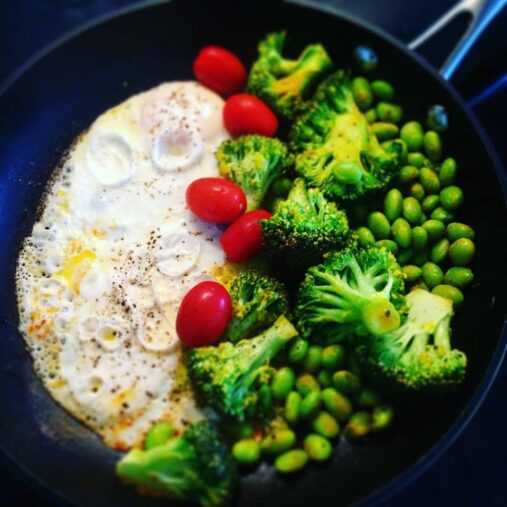
Good options include whole-grain oatmeal with Greek yogurt, berries, and chia seeds; a whole-grain sandwich with hummus and chicken or avocado and egg plus vegetables; or an omelet with broccoli and salmon. Do not forget hydration — start your day with a glass of water.

When There Is No Time to Cook in the Morning

Not every breakfast needs to be slow or beautifully plated. With a busy schedule, quick solutions are perfectly acceptable, and you can enjoy cooking on weekends instead. If mornings are very rushed, prepare breakfast the night before.

Good make-ahead options include:

  • overnight oats — mix oats with yogurt or milk, berries or fruit, and seeds in a jar
  • egg muffins — bake eggs with vegetables in muffin tins and store in the fridge
  • sandwiches — whole-grain bread with protein and fat sources (e.g., ham and cheese or hummus and chicken) plus vegetables
  • boiled eggs and fruit

There are also many breakfasts that take just a few minutes:

  • yogurt + berries + nuts
  • fruit + nuts or a boiled egg (prepared in advance)
  • whole-grain roll with gravlax
  • rye bread with cottage or cream cheese

Breakfast Is an Investment in Your Well-Being

Breakfast is not just a meal — it is a habit that strongly influences your well-being. A balanced breakfast supports stable energy levels, concentration, and healthy weight management. If you lack appetite in the morning, review your dinner timing and start with small portions. The key is to focus on solutions and find suitable options even with the busiest schedule — by choosing the right foods and planning ahead. Breakfast does not need to be complicated or perfect, but it should be consistent, balanced, and supportive of your health.

5 Reasons to Lose Weight — and None of Them Are About Appearance


Author: Irina Tamme / Nutritionist / Lecturer in Nutrition and Health

Excess weight and obesity are major public health concerns — not only in Estonia, but worldwide. That is why so many people have tried, or at least considered, losing weight. Weight loss is often linked to appearance: the desire to look better, fit into certain clothes, or match society’s beauty standards. It is understandable — we all want to look good and feel confident. But in reality, the most important goal of weight loss should be something else — and far more meaningful: health.

Excess weight is not merely an aesthetic issue; it is one of the most significant risk factors for many chronic diseases. And these conditions often develop quietly, without clear symptoms. That is precisely why prevention matters so much — and one of the most effective preventive measures, when excess weight is present, is weight loss. Below are five reasons to lose weight when you carry extra kilos — and not a single one of them is about appearance.

1) Heart Health

Excess weight places a constant extra burden on the heart, because a larger body requires more tissue to be supplied with blood. This often leads to higher blood pressure, which puts additional strain on the cardiovascular system and can eventually exhaust the heart muscle. At the same time, excess body fat affects cholesterol levels: so-called “bad” LDL cholesterol increases, “good” HDL cholesterol decreases, and the risk of atherosclerosis rises.

Most of this happens quietly and gradually. Cardiovascular diseases — hypertension, atherosclerosis, heart failure — can develop over years without obvious symptoms. Often, a person only becomes aware of the problem after something serious occurs, such as a heart attack or stroke. That is why it is better not to wait for “warning signs,” but to act preventively. Even a 5–10% weight loss can reduce cardiovascular strain, lower blood pressure, and slow the progression of atherosclerosis. It is a change that can genuinely save lives.

2) Type 2 Diabetes Prevention

Excess weight — especially abdominal fat — is strongly linked to insulin resistance, a condition in which the body’s cells stop responding efficiently to insulin. As a result, blood sugar levels rise and, over time, type 2 diabetes can develop. This disease also tends to progress silently: insulin sensitivity may gradually decline and blood sugar may be slightly elevated for years, while the person feels completely normal. By the time a diagnosis is made, unwanted changes may already have occurred — affecting blood vessels, kidneys, and nerves.

Weight loss can prevent diabetes or even lead to remission, particularly in the early stages. Even a moderate weight reduction (10–15%) improves insulin sensitivity and, in some cases, can fully reverse prediabetes (a state where blood sugar is above normal, but not high enough for a type 2 diabetes diagnosis). For those who already have diabetes, losing weight supports better blood sugar control, may reduce medication needs, and can slow the progression of complications.

3) Easier Movement and Breathing

Excess weight does not only affect internal organs — it directly impacts mobility and quality of life. With extra kilos, knees and hips must function beyond their natural capacity, which can lead to joint pain and premature wear at a relatively young age.

Weight also affects breathing. Excess fatty tissue in the chest and neck area can restrict airflow and may contribute to sleep apnea — a condition in which breathing temporarily stops during sleep. The result is daytime fatigue and consistently low energy levels.

Weight loss can bring noticeable relief, sometimes surprisingly quickly. With every kilo lost, movement often becomes easier and breathing feels freer. Physical activity becomes more enjoyable again — which, in turn, helps you lose weight more effectively or maintain it more easily.

4) Mental Health and Well-Being

Improved health also supports mental well-being. When the body feels lighter and there are fewer health issues, mood often improves, energy levels rise, and sleep quality gets better. Increased physical activity — which frequently comes with healthy weight loss — can also reduce stress and anxiety.

People who lose weight in a sustainable, health-focused way often say the biggest change is not what they see in the mirror, but how they feel. They have more stamina, sleep better, feel comfortable in their body, and gain confidence. Much of this comes from the awareness that they are caring for themselves — and that has a powerful positive effect on mental health.

5) Hormonal Balance and Lower Inflammation

Body fat is not just a passive energy storage. It is an active tissue that produces hormones and inflammatory mediators (cytokines, adipokines). When there is too much fat, the body may remain in a state of chronic low-grade inflammation, increasing the risk of many conditions: cardiovascular disease, cancer, hormonal disruptions (including leptin resistance), infertility, and non-alcoholic fatty liver disease.

Losing weight helps reduce inflammation and restore hormonal balance. This can mean stronger immunity, better chronic disease prevention, easier appetite control, and a more stable mood.

A Healthier Life

Medicine continues to advance, and many illnesses that were once untreatable can now be treated or controlled. At the same time, lifestyle habits often undermine these efforts. That is why each of us should take responsibility for our health. The goal should not be merely to live longer, but to live longer in good health.

If excess weight is an issue, it is worth finding ways to address it. A healthy body weight not only reduces disease risk — it also improves quality of life: more energy, better mobility, and the freedom to do what excess weight can limit, whether that is hiking, dancing, or playing with your children.

And even if conditions have already been diagnosed, it is not too late. Weight loss can help manage them more effectively and prevent progression. Every kilo lost is a step toward better health.

Weight Loss as Self-Love

Weight loss often begins with negative feelings toward oneself and can feel like punishment. But it does not have to be that way. Weight loss can begin with self-love — with the desire to care for your body and your health. It can be viewed as an investment in your well-being. It is not only a path toward a “better-looking body,” but toward a healthier life.

Weight-related diseases often creep in quietly and gradually — we do not fear what we cannot see or feel. A tooth infection hurts, and it is impossible to ignore; many of the health issues mentioned above may remain silent until, unfortunately, it is too late. Let’s not wait for that. Let’s act preventively. Every healthier choice, every step, and every kilo lost is an investment that pays back many times over.

Regular Eating — Why Is It Important?


Author: Irina Tamme / Nutritionist / Lecturer in Nutrition and Health

Regular eating is one of the simplest yet most important habits supporting both physical and mental well-being. When it comes to health-supportive nutrition, regular meal timing is one of its key foundations. We often focus on what to eat, but it is equally important to consider when and how often we eat. Let’s take a closer look at what regular eating means, how frequently you should eat, why it matters, and what health benefits it provides.

What is Regular Eating?

Simply put, regular eating means having meals at roughly the same times each day, with intervals that are neither too long nor too short. It does not mean following a rigid diet or living by the clock, but rather creating a stable rhythm. There is no need to eat at exactly the same minute every day — eating at approximately similar times, with flexibility of 30–60 minutes, is perfectly sufficient. The goal is consistency, not perfection.

Most commonly, regular eating includes three main meals — breakfast, lunch, and dinner — with one or two snacks if needed to keep energy levels stable. However, there is no single “correct” number of meals. Some people feel better eating smaller portions more frequently, while others prefer three larger meals. The key is to consider your daily schedule, listen to your body, and establish a pattern that supports both your lifestyle and well-being.

Why Is Regularity Important?

The body thrives on stability. When you eat at roughly the same times each day, your body can better anticipate incoming energy, allowing metabolic and hormonal processes to function more smoothly. Over time, the body adapts to this rhythm, and hunger naturally appears shortly before the next planned meal.

Regular eating helps maintain more stable blood sugar levels. When blood sugar does not fluctuate sharply, overall daily well-being improves: there is less fatigue, irritability, uncontrolled cravings, and overeating.

Regular meals also help reduce constant snacking, as energy levels remain steadier and meals are planned in advance. Long gaps between meals can lead to intense hunger, which often results in quick and less nutritious food choices. When meals are planned and hunger is kept at a manageable level, making thoughtful and health-supportive choices becomes much easier.

In addition, a regular eating rhythm supports digestive health. The workload on the digestive system is evenly distributed — avoiding both prolonged fasting and constant digestion of large amounts of food.

How Often Should You Eat?

The most common structure is three main meals per day with one or two snacks. However, a practical guideline is to keep meal intervals within 3–5 hours. Eating more frequently than this does not allow the digestive system to rest, keeps blood sugar levels consistently higher (which can interfere with weight loss), and may negatively affect dental health. On the other hand, intervals of 6 hours or more can cause blood sugar to drop too low, leading to overeating later, energy crashes, fatigue, and irritability.

The ideal number of meals also depends on activity level, length of the day, and meal size. More active individuals, pregnant women, breastfeeding mothers, or people with certain health conditions may need to eat more frequently — and this is completely normal. The body usually signals these needs clearly. People with long and demanding days also tend to eat more than three times per day. Others feel best with three larger meals — which is equally valid. Ultimately, the most important thing is finding a rhythm that suits your schedule, routine, and energy needs.


Health Benefits of Regular Eating

Regular eating offers several health benefits:

  • stable blood sugar levels — fewer cravings and overeating episodes, fewer energy crashes, better concentration
  • smoother digestion — food is digested and absorbed more efficiently, reducing discomfort
  • better weight management — regular meals help prevent overeating and support healthier food choices
  • improved mood — blood sugar fluctuations affect mood, and a steady rhythm helps reduce irritability
  • stronger immunity — regular eating supports adequate nutrient intake, which strengthens the body’s defense systems
How to Establish a Regular Eating Routine?

A regular routine does not develop overnight — it takes practice. Helpful strategies include:

  • Meal planning — review your daily schedule and plan meals, aiming to follow the timing within ±60 minutes
  • Meal prep — having food prepared and ready significantly increases consistency
  • “SOS meals” — for example, cottage cheese with bread, an egg and fruit, aspic with beetroot, etc. The key is that the option is balanced, enjoyable, and easily accessible
  • Keeping balanced snacks on hand — such as nuts with dried fruit or a nut-based muesli bar, so you have a suitable option if your day unexpectedly runs long
  • Learning to listen to your body — notice hunger and fullness cues and adjust meal timing accordingly, while remembering that the body also adapts to the rhythm you establish

In Summary

Do not view regular eating as a restrictive rule that must be followed strictly, but as a supportive habit that creates a framework for better health and well-being. It helps maintain stable energy levels, supports digestion, balances mood, aids weight management, and encourages more thoughtful, health-supportive food choices. Regular eating can be flexible, supportive, and tailored to your lifestyle. Try making it a habit — you may be surprised by how powerful its impact can be.

Why Weight Loss Fails When You Eat Too Little?


Author: Irina Tamme / Nutrition Consultant / Lecturer in Nutrition and Health

If you have ever thought, “the less I eat, the faster I’ll lose weight,” you are certainly not alone. It seems logical at first glance. In reality, however, an excessively large calorie deficit often becomes the very obstacle that ultimately derails the weight-loss journey. Not because something is wrong with your body, but because it is doing exactly what it is designed to do — keeping you alive. Moreover, this approach is not sustainable or realistic in the long term. Below, I explain why the body reacts this way, why extreme energy deficits almost inevitably lead to breakdowns, and what health consequences can arise from eating too little.

Metabolic Adaptation

Metabolic adaptation is the body’s natural response to calorie restriction, during which energy expenditure decreases on several levels:

  • basal metabolic rate slows down
  • heat production decreases (often accompanied by feeling cold)
  • spontaneous physical activity decreases (NEAT — non-exercise activity thermogenesis)
  • less energy is burned during workouts, as the body becomes more efficient and lacks resources for maximal effort

It is important to understand that metabolic adaptation does not completely stop weight loss — it simply slows it down. However, this often negatively affects motivation to continue the process.

Weight loss typically stalls only when the deficit effectively disappears: calorie intake may increase unconsciously due to hunger, NEAT may drop so significantly that total energy expenditure declines, or muscle mass may be lost, reducing overall daily energy needs. Weight can also stagnate due to inaccurate calorie tracking or fluctuations in fluid balance caused by stress and hormonal changes. Metabolic adaptation is not permanent — it gradually reverses as calorie intake increases and body weight stabilizes. However, after extreme dieting, this process can last longer and take more time to normalize.

Hunger Eventually Wins

The less food you eat, the stronger hunger becomes. For a while, it may be possible to rely on willpower, but eventually this is no longer just a mild urge to eat — it turns into real, physiological hunger due to the following changes:

  • increased levels of the hunger hormone ghrelin
  • decreased levels of the satiety hormone leptin
  • increased levels of the stress hormone cortisol, which drives cravings and promotes fat storage, particularly around the abdomen
  • constant, intrusive thoughts about food

In this state, it is impossible to continue indefinitely on willpower alone, and a breakdown eventually occurs — not because of weak motivation, but because hormonal imbalance causes the body to work against you.

When cycles of extreme dieting and subsequent breakdowns repeat, feelings of guilt, binge-eating episodes, and the yo-yo effect (repeated weight gain and loss) emerge, making the entire process feel hopeless. Instead of self-blame, it is essential to recognize that the issue lies not with the individual, but with an excessively large calorie deficit.

Loss of Muscle Mass and Bone Density

An overly large calorie deficit affects not only body weight but overall body composition and health. During extreme dieting, the body begins to draw energy from muscle tissue — even if you are exercising. When food intake is low and protein and overall energy intake are insufficient, muscle mass is lost, leading to:

  • a slower metabolism and reduced energy expenditure even at rest
  • decreased strength, endurance, and physical performance
  • impaired glucose tolerance (greater muscle mass supports better insulin sensitivity) and poorer metabolic health
  • more difficult weight loss

Long-term calorie restriction also negatively affects bone health. Low food intake often means insufficient protein, calcium, and vitamin D, as well as disruptions in sex hormone balance — all of which are closely linked to bone density. As a result, bones become more fragile, fracture risk increases, and long-term risk of osteoporosis may rise. Many people do not associate low calorie intake with bone health, yet these factors are frequently interconnected.

заны с плотностью костей. В результате кости становятся более хрупкими, риск переломов возрастает, а в долгосрочной перспективе может увеличиться и риск остеопороза. Многие не связывают низкую калорийность рациона с состоянием костей, хотя эти факторы тесно взаимосвязаны.

Reduced Immunity and Nutrient Deficiencies

When calorie restriction becomes extreme, it does not matter how carefully you try to plan your diet — there is simply too little food to obtain all essential vitamins and minerals. Very often, the immune system is the first to signal this imbalance.

Frequent colds, persistent fatigue, slower recovery, and feelings of exhaustion are common. Micronutrient deficiencies also affect energy levels, mood, and physical endurance. Under such conditions, the body will not prioritize weight loss when it lacks the resources needed for basic vital functions.

Future Weight Loss Attempts Become Harder

The body is intelligent, and once it has experienced extreme dieting, it remembers it. Metabolism may remain in a more energy-conserving state for an extended period, restoring hormonal balance and lost muscle mass takes time, and psychological resistance can develop. As a result, each subsequent dieting attempt may feel more difficult, slower, and more exhausting — not because you are older or lack willpower, but because the body is trying to avoid another period of starvation.

Less Is Not Better

In conclusion, eating too little does not accelerate weight loss — it hinders it. Extreme calorie deficits slow metabolism, increase hunger, damage muscles and bones, disrupt hormonal balance, weaken the immune system, create nutrient deficiencies, make adherence impossible, and complicate future weight-loss efforts.

Therefore, less is not better. If the goal is sustainable and healthy weight loss, a moderate, body-supportive calorie deficit is essential. Generally, this means reducing daily energy intake by about 10–25%, which corresponds to roughly 250–500 kcal. It is crucial to remember: even for weight loss, you need to eat enough.

From Bingeing and Fad Diets to a Catalyst for Change: The Story of Medical SPA CEO Karina Küppas


At Narva-Jõesuu Medical SPA, a one-of-a-kind Detox & Antistress center has helped thousands of people reset their lifestyle and reach the goals they set for themselves — a healthier weight, more vitality, and better thinking habits. At the heart of this evolution is the spa’s managing director and system coach, Karina Küppas.

From overeating and restriction to awareness. Karina once lived the way many women still do: periods of strict dieting followed by overeating. “Every year, there were more extra kilos,” she recalls. “At first, a strict diet seemed like a clever fix. If there are 365 days in a year and I only ‘have’ to restrict for fourteen of them, that felt like a good deal.” Her diet routine was stark: two slices of tomato and two slices of cheese with morning coffee; a clear vegetable soup at midday; and, for dinner, 200 grams of fish with salad.

“Dinner felt so enticing — something to look forward to,” she says.

Binge, then starve; repeat. Karina knows that cycle intimately — which is why she understands women who fall into it.

Eating as “time off”

The pattern started in childhood.

“Summers at my grandmother’s country house meant constant work. I wanted to rest, read, just be. I quickly realized that when we were eating, we weren’t working. Instead of chewing slowly to stretch mealtime, I simply ate more. Afterwards, Grandma let me take three candies — another way to extend the break. Food became synonymous with rest, and that association stayed with me for years.”

At 19, during her first marriage, a small incident cut deep.

“I was at a bus stop when a stranger on the phone said, ‘So many young women are pregnant now,’ glancing at my stomach. I wasn’t pregnant. I was wearing a fitted T-shirt and, yes, you could probably see a little belly. I remember that moment vividly. It intensified my insecurity. I started punishing myself with stricter diets and more workouts — which only led to bigger binges.”

“Looking back, it would have helped so much if someone had said I was accepted as I was — that I was enough and loved as I was. My husband did love me, of course, but he never commented on my appearance, and I wasn’t wise enough then to think: if he loves me, he loves all of me.”

The last diet

Like many, Karina often thought, I overate today; tomorrow I’ll start the life-changing diet. She remembers the morning of her last diet clearly — twelve years ago.

“After another overeating evening, I went to the fridge for my two slices of cheese. I looked at them and thought: I can’t do this anymore. I simply can’t.”

By then, Karina was already managing director of Narva-Jõesuu Medical SPA.

“We have doctors and science here — people who should know how to keep weight healthy,” she thought.

At the time, the conversation was mostly about what not to eat.

“It was all restrictions, all the time. That didn’t feel like a real solution.”

She started counting calories — a tool she still considers useful for a couple of months to learn the landscape of food, but not a long-term strategy. Together with the spa team, she built the first weight-loss program: seven nights at the spa with balanced, tasty meals, supportive treatments, and enough movement.

“Many said they’d absolutely continue once they left. Not everyone did. I kept asking myself: what happens in between? I realized I was still missing something — the whole picture of how to help people, and myself.”

Weight loss program with FITLAP menu (5 nights)

A jolt to the system

Three years ago, the pandemic hit and the spa shut its doors overnight.

“I was already in a rough place emotionally — going through a second divorce, with a small child, and heavy responsibility at work. My stress was sky-high, and it wrecked my eating patterns. I wouldn’t eat for days, then I’d grab a bite and spiral into a binge. My weight climbed, my blood pressure was high, my heart wasn’t working well, I had headaches. One day I lost vision in one eye. It was stress and anxiety written all over my body.”

A doctor suggested heart medication.

“That scared me. I knew I had to change something radically. I didn’t want to be on heart pills at my age.”

The forced pause, she says now, was ultimately good. Her vision returned. Sitting at home, she developed a keen interest in psychology and started studying. Today, she’s a system coach who helps people recognize their patterns — and break them.

“Very often, by changing one small thing, you achieve several goals at once.”

The first person she helped was herself.

“I understood how tightly stress and excess weight are linked.”

The power of simple truths

Searching for answers to her heart issues, Karina picked up a cardiologist’s book.

“There was no miracle pill. The advice was movement, a healthy menu, less salt, enough sleep, and constructive thinking. That’s when it clicked: there isn’t a magic fix. It really is that simple. I’d always thought I was so ‘special’ I needed a bespoke meal plan, a special psychologist, something unique. I believed my body was exceptional and everyday healthy living wouldn’t work for me. Now I know: the key is simplicity. Yes, we’re all unique — with our own patterns, traumas, and challenges — but that doesn’t exempt us from the basics.”

For people who are “special enough,” yet perfectly human

That realization shaped the Detox & Antistress center at Narva-Jõesuu Medical SPA as it is today.

“It’s designed for people who’ve reached a point where they know they can’t go on as before and need to hit pause. You can’t take that pause at home, at a friend’s place, or with your parents. And standard spa services aren’t enough for someone at that point. You need a different approach.”

Karina believes the answers we seek are already inside us — but when our minds are flooded with everyday noise, we simply can’t hear them. That’s why the center focuses on deep relaxation that quiets mental chatter.

“When you’re exhausted and feel like you’re up against a wall, your mind can’t accept the right answers. A pause is essential. It’s the reboot you need. Your brain lets go of the excess.”

Many guests who stay three days to a week walk around with a notebook, jotting down insights and ideas.

“Out-of-the-box thinking flows — including solutions to your long-standing challenges. You start seeing from an observer’s perspective.”

Only after that reboot does Karina suggest meeting with a nutritionist or joining a coaching program.

“You’re starting from a new place. It’s a solid launchpad.”

Don’t run yourself into the red

Karina offers a simple framework: think of your energy on a plus–zero–minus scale.

“We tend to work until we’re deep in the minus — totally drained — then try to grind our way back to zero and beyond. But where will that energy come from if you’ve got none left? It’s far better to exhale in the middle — near zero — and never let yourself slide into the red. That means you rest and recharge while you still feel good. Do that, and you’ll springboard from ‘already good’ to ‘even better.’”

“Society often glorifies grinding in the minus. But we can’t be high-energy all the time — nature has day and night, winter and summer. We also need work time and recovery time.”

The one thing you need: a plan

“In business, we plan meetings, deadlines, and project milestones. So why don’t we plan our meals, bedtime, or rest? You are your most important project,” Karina says.


Newsletter

Subscribe to our newsletter to enjoy the best offers at Narva-Jõesuu Medical Spa!