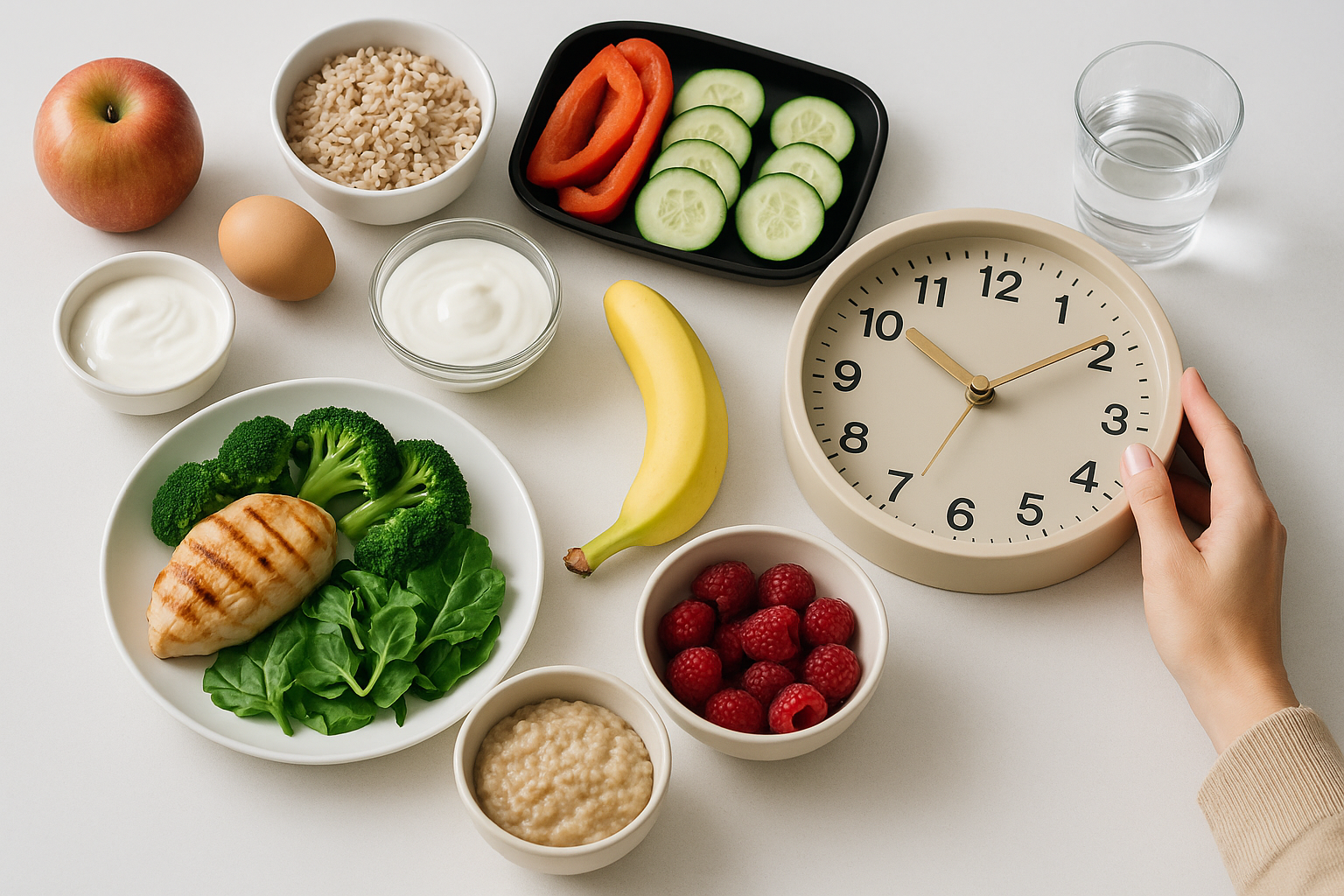
Why Weight Loss Fails When You Eat Too Little?

Author: Irina Tamme / Nutrition Consultant / Lecturer in Nutrition and Health
If you have ever thought, “the less I eat, the faster I’ll lose weight,” you are certainly not alone. It seems logical at first glance. In reality, however, an excessively large calorie deficit often becomes the very obstacle that ultimately derails the weight-loss journey. Not because something is wrong with your body, but because it is doing exactly what it is designed to do — keeping you alive. Moreover, this approach is not sustainable or realistic in the long term. Below, I explain why the body reacts this way, why extreme energy deficits almost inevitably lead to breakdowns, and what health consequences can arise from eating too little.

Metabolic Adaptation
Metabolic adaptation is the body’s natural response to calorie restriction, during which energy expenditure decreases on several levels:
- basal metabolic rate slows down
- heat production decreases (often accompanied by feeling cold)
- spontaneous physical activity decreases (NEAT — non-exercise activity thermogenesis)
- less energy is burned during workouts, as the body becomes more efficient and lacks resources for maximal effort
It is important to understand that metabolic adaptation does not completely stop weight loss — it simply slows it down. However, this often negatively affects motivation to continue the process.
Weight loss typically stalls only when the deficit effectively disappears: calorie intake may increase unconsciously due to hunger, NEAT may drop so significantly that total energy expenditure declines, or muscle mass may be lost, reducing overall daily energy needs. Weight can also stagnate due to inaccurate calorie tracking or fluctuations in fluid balance caused by stress and hormonal changes. Metabolic adaptation is not permanent — it gradually reverses as calorie intake increases and body weight stabilizes. However, after extreme dieting, this process can last longer and take more time to normalize.

Hunger Eventually Wins
The less food you eat, the stronger hunger becomes. For a while, it may be possible to rely on willpower, but eventually this is no longer just a mild urge to eat — it turns into real, physiological hunger due to the following changes:
- increased levels of the hunger hormone ghrelin
- decreased levels of the satiety hormone leptin
- increased levels of the stress hormone cortisol, which drives cravings and promotes fat storage, particularly around the abdomen
- constant, intrusive thoughts about food
In this state, it is impossible to continue indefinitely on willpower alone, and a breakdown eventually occurs — not because of weak motivation, but because hormonal imbalance causes the body to work against you.
When cycles of extreme dieting and subsequent breakdowns repeat, feelings of guilt, binge-eating episodes, and the yo-yo effect (repeated weight gain and loss) emerge, making the entire process feel hopeless. Instead of self-blame, it is essential to recognize that the issue lies not with the individual, but with an excessively large calorie deficit.
Loss of Muscle Mass and Bone Density
An overly large calorie deficit affects not only body weight but overall body composition and health. During extreme dieting, the body begins to draw energy from muscle tissue — even if you are exercising. When food intake is low and protein and overall energy intake are insufficient, muscle mass is lost, leading to:
- a slower metabolism and reduced energy expenditure even at rest
- decreased strength, endurance, and physical performance
- impaired glucose tolerance (greater muscle mass supports better insulin sensitivity) and poorer metabolic health
- more difficult weight loss
Long-term calorie restriction also negatively affects bone health. Low food intake often means insufficient protein, calcium, and vitamin D, as well as disruptions in sex hormone balance — all of which are closely linked to bone density. As a result, bones become more fragile, fracture risk increases, and long-term risk of osteoporosis may rise. Many people do not associate low calorie intake with bone health, yet these factors are frequently interconnected.
заны с плотностью костей. В результате кости становятся более хрупкими, риск переломов возрастает, а в долгосрочной перспективе может увеличиться и риск остеопороза. Многие не связывают низкую калорийность рациона с состоянием костей, хотя эти факторы тесно взаимосвязаны.

Reduced Immunity and Nutrient Deficiencies
When calorie restriction becomes extreme, it does not matter how carefully you try to plan your diet — there is simply too little food to obtain all essential vitamins and minerals. Very often, the immune system is the first to signal this imbalance.
Frequent colds, persistent fatigue, slower recovery, and feelings of exhaustion are common. Micronutrient deficiencies also affect energy levels, mood, and physical endurance. Under such conditions, the body will not prioritize weight loss when it lacks the resources needed for basic vital functions.

Future Weight Loss Attempts Become Harder
The body is intelligent, and once it has experienced extreme dieting, it remembers it. Metabolism may remain in a more energy-conserving state for an extended period, restoring hormonal balance and lost muscle mass takes time, and psychological resistance can develop. As a result, each subsequent dieting attempt may feel more difficult, slower, and more exhausting — not because you are older or lack willpower, but because the body is trying to avoid another period of starvation.
Less Is Not Better
In conclusion, eating too little does not accelerate weight loss — it hinders it. Extreme calorie deficits slow metabolism, increase hunger, damage muscles and bones, disrupt hormonal balance, weaken the immune system, create nutrient deficiencies, make adherence impossible, and complicate future weight-loss efforts.
Therefore, less is not better. If the goal is sustainable and healthy weight loss, a moderate, body-supportive calorie deficit is essential. Generally, this means reducing daily energy intake by about 10–25%, which corresponds to roughly 250–500 kcal. It is crucial to remember: even for weight loss, you need to eat enough.